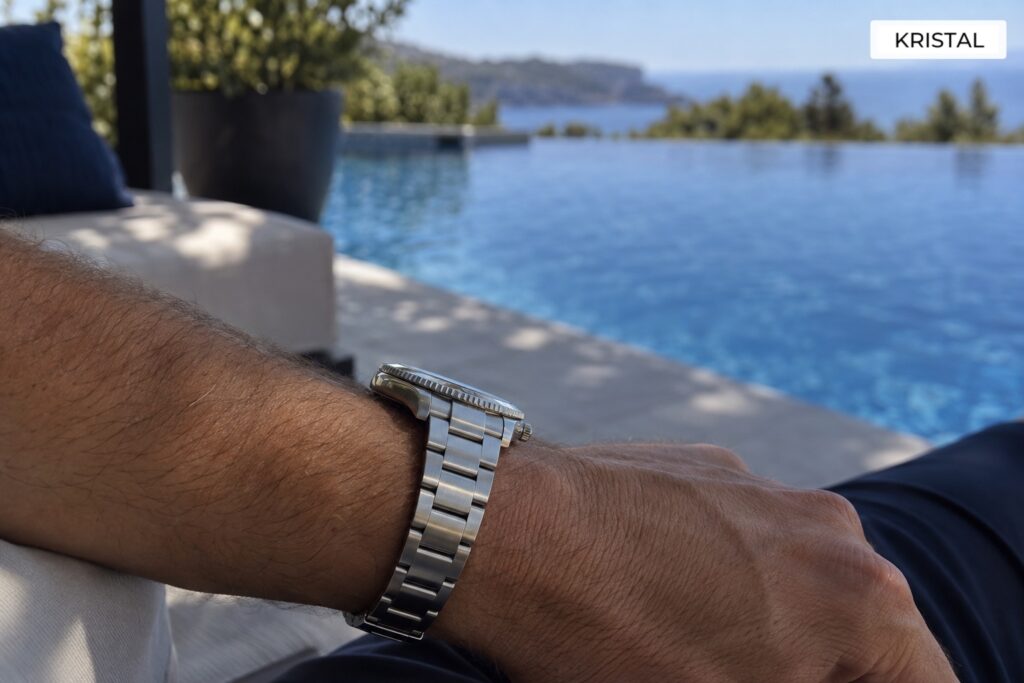
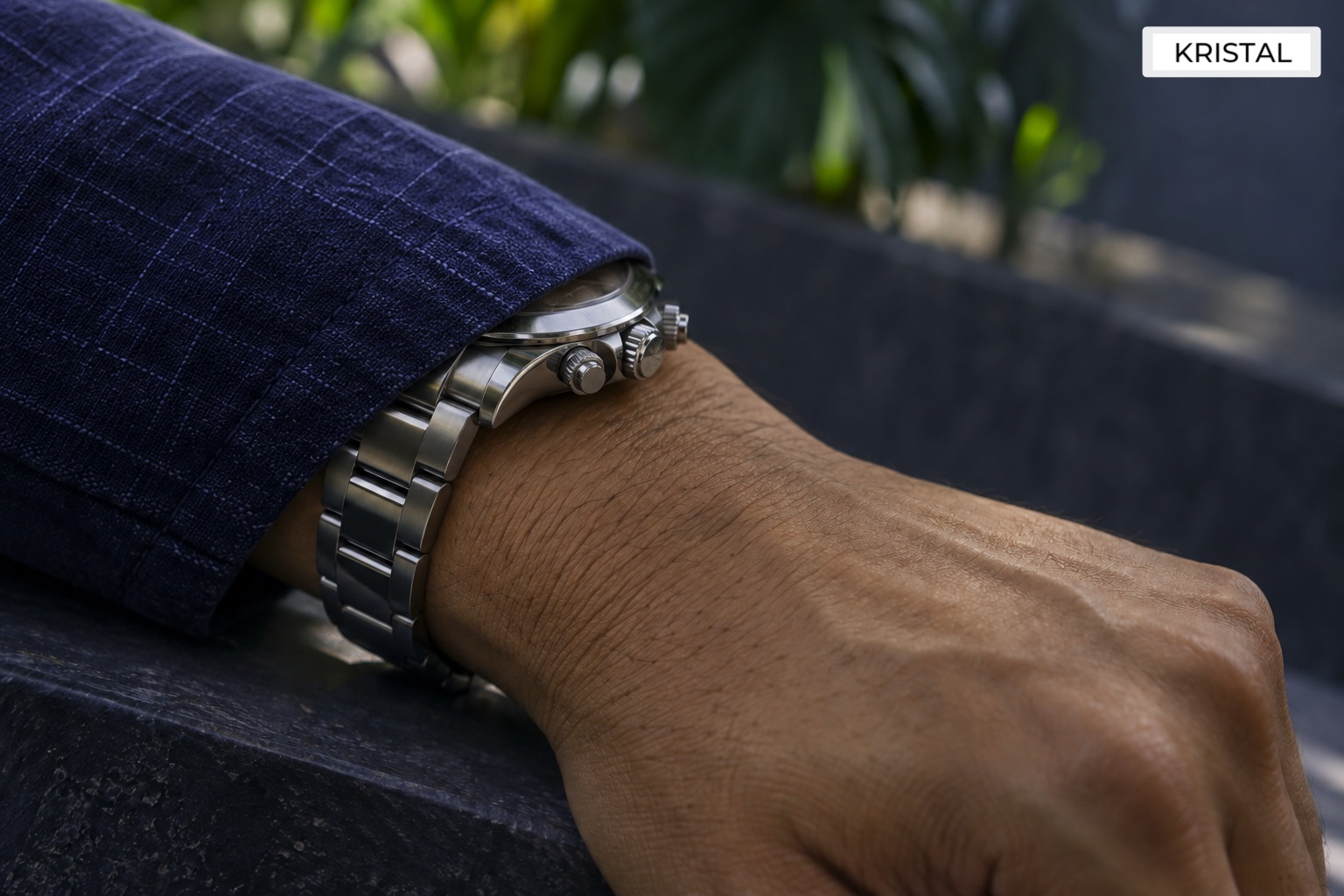
The Rolex Daytona’s upper pusher starts and stops the stopwatch; the lower pusher resets it once stopped. Read the elapsed duration separately from the time of day. The instructions below apply to the standard layout in the linked manual.
If you own a pre-owned Daytona in Malaysia, start by finding the instructions for your reference. This guide uses Rolex’s standard Daytona manual, dated April 2019. Check your reference against the official Rolex user guides before operating it. Older references and special versions can differ; do not assume every Daytona has the same counter layout.
Identify the controls before trying them
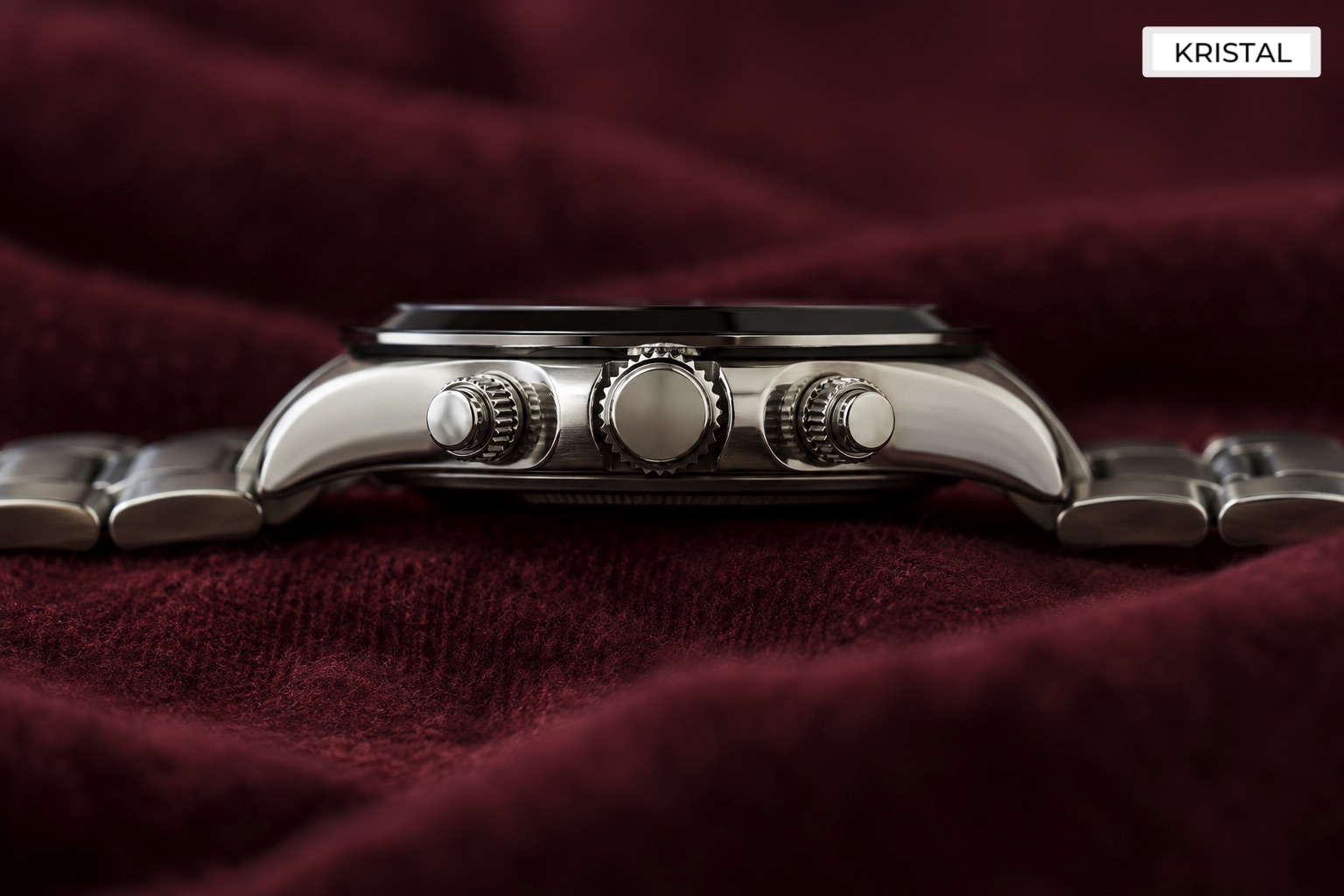
The pushers flank the winding crown. Unscrew their collars to use the stopwatch; leave the crown closed.
Use a dry, well-lit place where you can handle the watch without rushing. Read the instructions first, then try a short interval while seated. If you cannot confidently distinguish the controls, ask a qualified watch professional to demonstrate them for your reference.
Start, stop and reset in order
Rolex’s Daytona user guide, pages 10–11, gives this sequence:
- Fully unscrew the pusher collars counterclockwise.
- If the chronograph is running, stop it with the upper pusher.
- Use the lower pusher to return the elapsed-time hands to zero.
- Press the upper pusher to begin timing.
- Press that same upper pusher to stop, then read the result.
- Screw the pushers down clockwise when finished.
For a fresh measurement, stop before resetting. Keep the written sequence beside you during your first attempt. Avoid experimenting with combinations of presses to see what happens; start with one short trial.
Read a duration, not the clock time
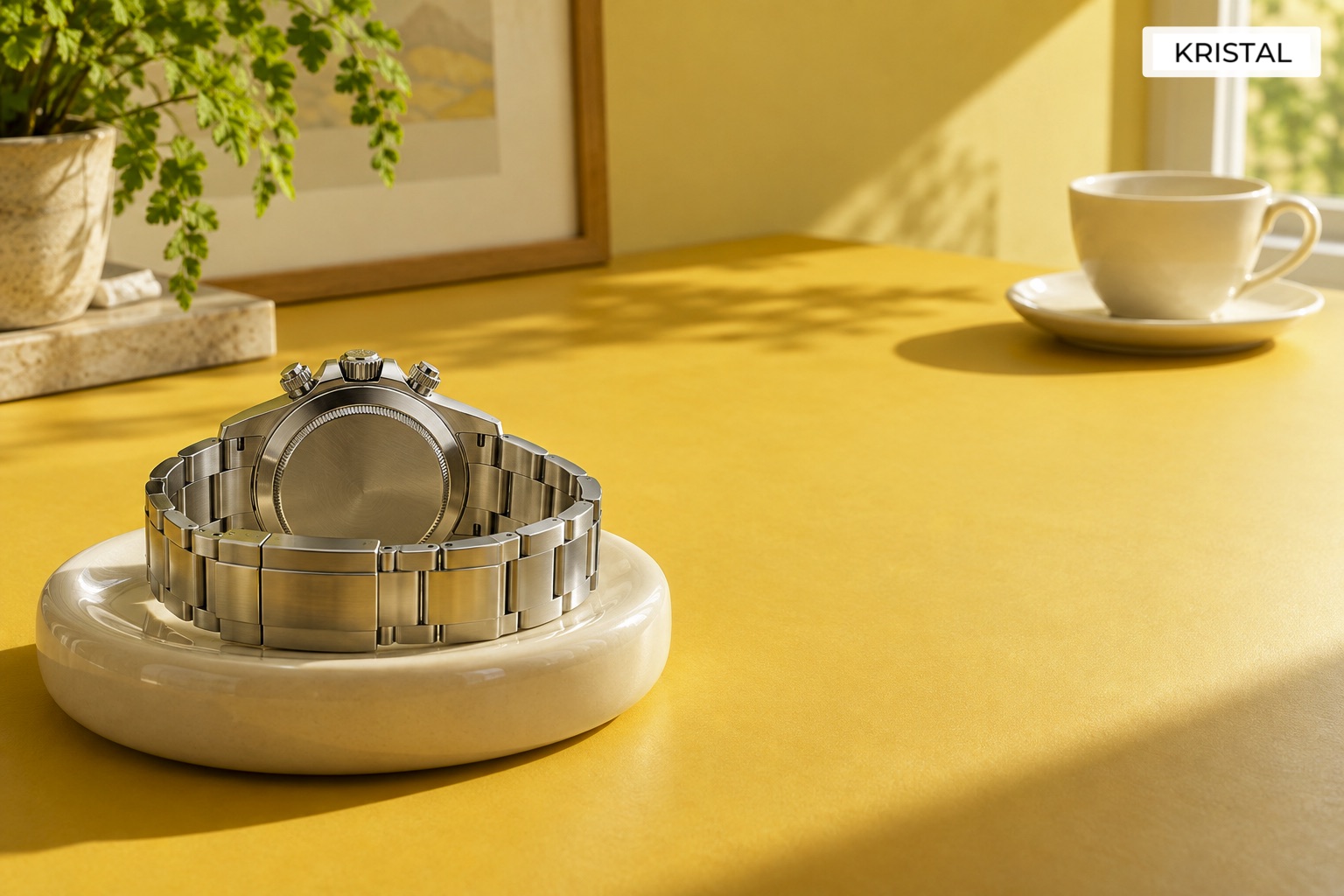
In the layout covered by the linked manual, elapsed seconds use the central chronograph hand, elapsed minutes use the counter at 3 o’clock, and elapsed hours use the counter at 9 o’clock.
Imagine timing a stationary task that finishes after 6 minutes and 20 seconds. Your answer is the combined duration, 6:20. It is not 6:20 in the morning or evening, and it is not twenty seconds simply because that is the easiest hand to notice.
Before starting, write down spaces for hours, minutes and seconds. Fill them in after stopping. This makes it harder to overlook a minute counter while concentrating on the centre hand. The example is a reading exercise, not a precision test or an assessment of the watch’s condition.
A second time zone answers a different question: what time is it somewhere else? Our GMT-Master II home and local time guide explains that separate function.
The bezel does a different calculation
Rolex describes the Daytona’s tachymetric scale as a way to read average speed using the chronograph. It is not another hour scale or a second time zone.
You do not need that calculation to time an ordinary task. Learn the elapsed-time display first and leave speed calculations for a separate exercise using the applicable manual. There is no reason to operate the watch while driving to practise this feature.
Know when to stop experimenting
A stationary central chronograph hand does not, by itself, tell you whether the whole watch has stopped. First distinguish the stopwatch display from ordinary timekeeping. If the issue is that the watch stops after being left unworn, see our guide to a Rolex that stops when not worn.
If a control resists normal use or the display does not respond as expected, stop. Note what you pressed and what happened, then ask a qualified professional to check it. Do not force a collar, open the case or try an online internal adjustment. Hand behaviour alone cannot establish authenticity or diagnose a movement problem.
Before your next use
Keep the correct manual bookmarked and practise the same short sequence once more when you have time. Familiarity should come from recognising the controls and reading the duration, rather than memorising where a hand happened to point in a photograph.
If you are considering selling your Rolex, our Rolex selling guide for Malaysia explains the resale options. You can contact Kristal about a Rolex resale enquiry, subject to review. A mechanical question should go to a qualified watch professional; this is not a Rolex service booking.