Use case diameter to shortlist a pre-owned Rolex, then try the actual watch on your wrist and check its bracelet length. Two watches with the same stated diameter can feel different, and a suitable case can still come with a bracelet that is too short.
Think about an ordinary day in Malaysia: wearing a work shirt, typing at a desk or moving between appointments. The checks below offer practical fitting suggestions. They do not establish authenticity or prescribe a size for every wrist.
Separate the case size from the bracelet fit
Listings may give you a case diameter but little about the bracelet. Ask the seller to identify the exact reference and explain how any measurements were taken.
| Detail | What it helps you judge | What it cannot settle alone |
|---|---|---|
| Case diameter | The width used to describe the watch size | How far the lugs extend across your wrist |
| Lug-to-lug length | The span from the upper case lugs to the lower ones | Whether the bracelet bends closely around your wrist |
| Case thickness | How high the watch sits | Comfort under your particular cuff |
| Bracelet length and adjustment | Whether the bracelet can close at a comfortable fit | Whether the case itself feels too large or heavy |
The lugs are the case projections where the bracelet attaches. Also look at the end links: the parts connecting the bracelet to the case can affect where it starts to curve downward. A single diameter measurement leaves that shape out.
Compare exact references, including older generations
A familiar collection name is not enough to identify the dimensions. Rolex’s official Explorer history describes a move to 39 mm in 2010 and a return to 36 mm in 2021; it also covers the Explorer 36 and Explorer 40. A pre-owned listing may therefore refer to a different generation from the watch shown on a current product page.
Use the reference to find the appropriate specifications. For example, Rolex lists Datejust reference 126200 as 36 mm. That number is a useful starting point, not a recommendation for every person with a particular wrist circumference.
If a listing omits lug-to-lug length or thickness, ask for measurements of the actual watch or arrange a fitting. Do not borrow numbers from a similar-looking reference. Avoid putting a hard measuring tool against a watch yourself if you are unsure how to avoid scratches.
Measure your wrist, then allow for its shape
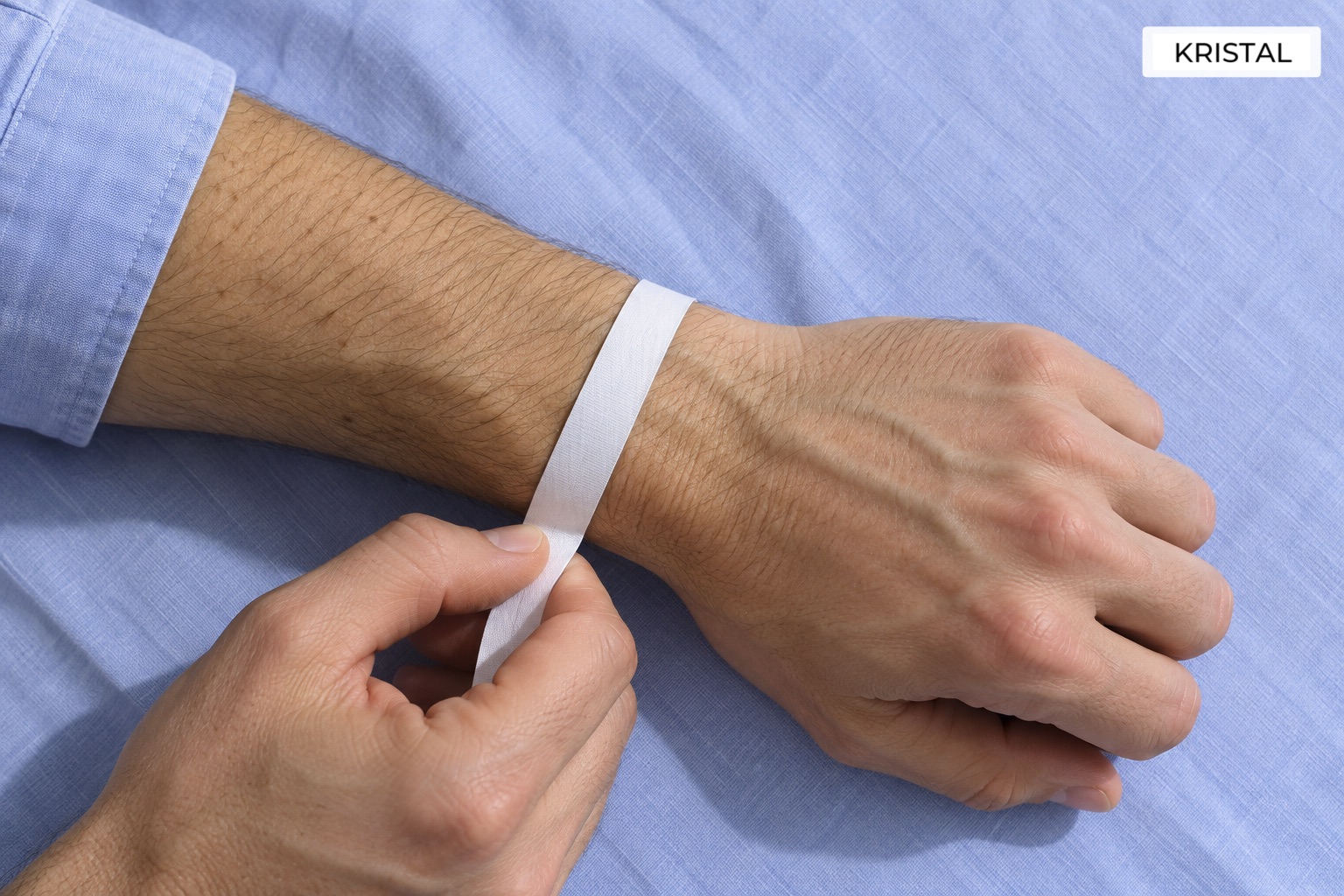
Wrap a flexible measuring tape around the place where you normally wear a watch, keeping it close without pulling it tight. Record the circumference and whether you prefer a closer or looser fit. If you use a strip of paper instead, mark where it meets and measure that length after removing it.
Use this information when asking about bracelet length. It does not automatically produce a correct case diameter. Wrists with the same circumference can have different shapes, and the flat area on top may accommodate a watch differently.
A watch you already find comfortable is a useful reference. Note what you like about it: the height, where the clasp sits, or how little it moves. You are comparing how it wears, not assuming matching diameters will feel identical.
Try the watch in the positions you actually use
With the owner’s permission, try the watch with its bracelet safely secured. If the bracelet is clearly too small, do not force the clasp closed. Ask a professional about fitting options first.
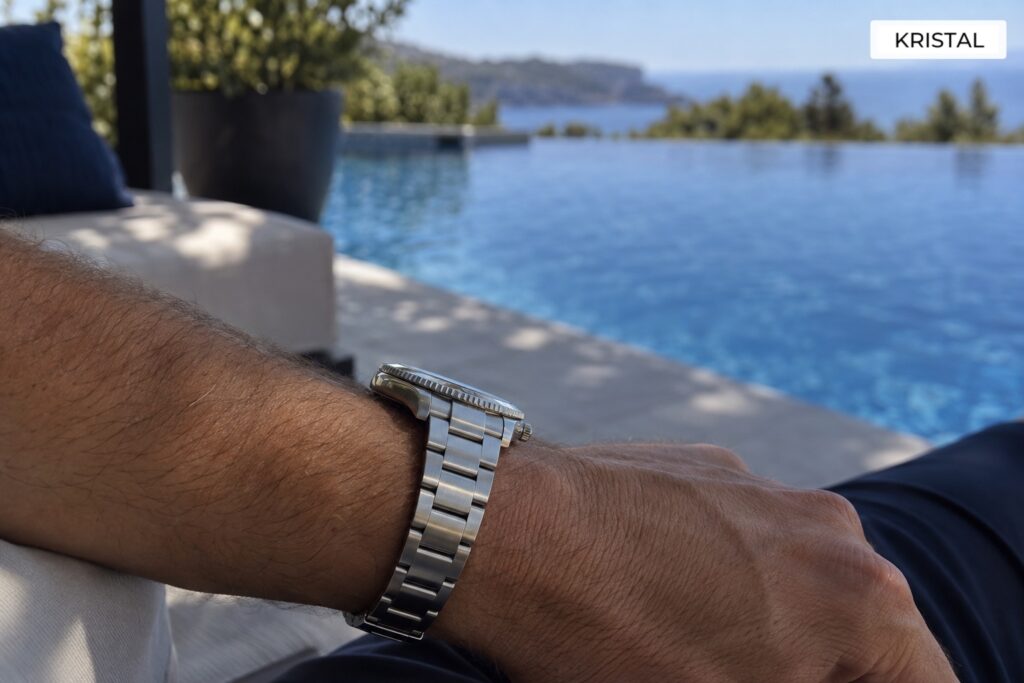
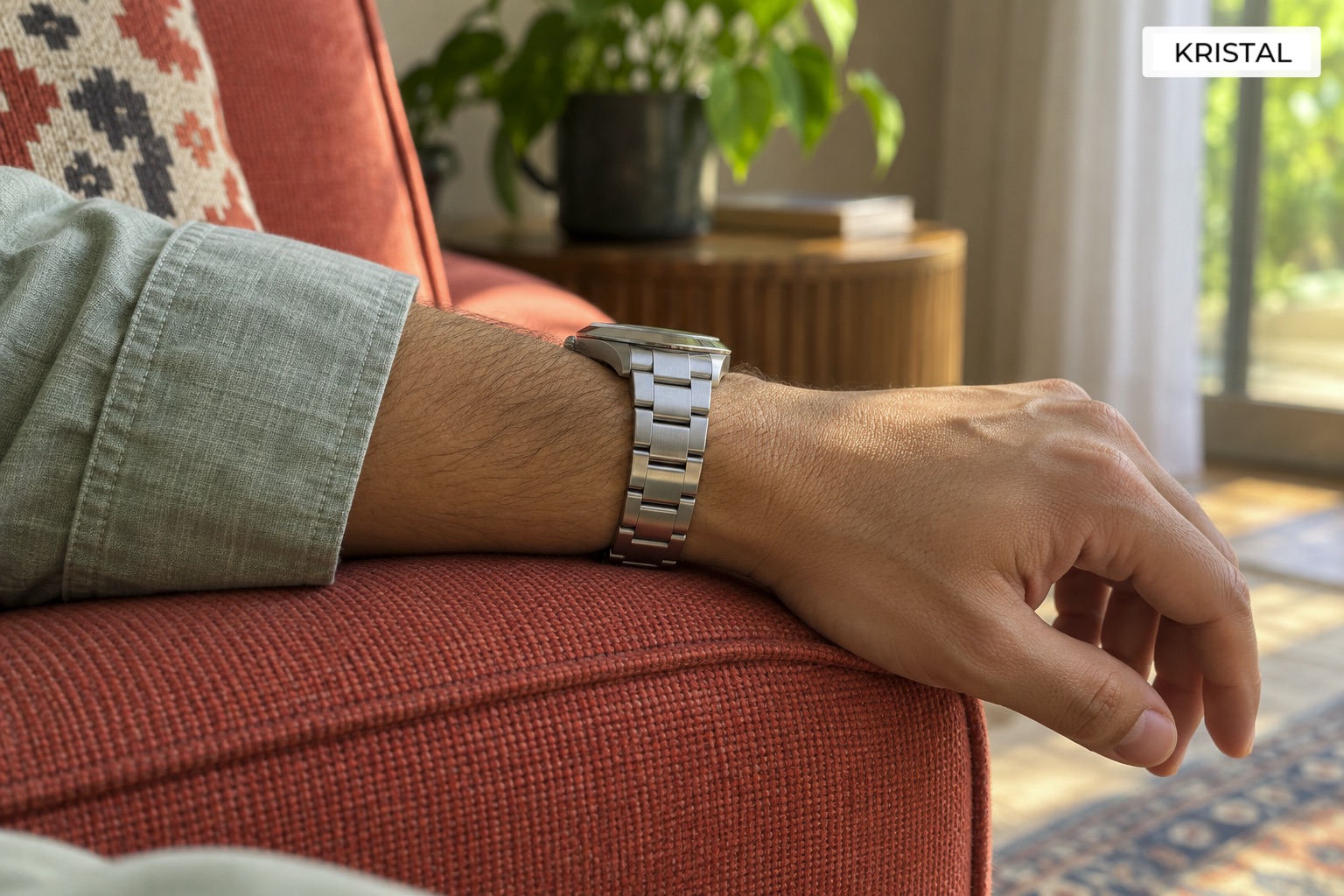
Look straight down at the wrist, then from the side. Check whether the lugs sit comfortably over the wrist and whether the watch stays balanced as you move your arm. A close phone photograph can give a different impression from seeing your whole forearm, so do not make the decision from one photograph.
Gently bend your wrist, rest your hand as you would when typing, and try the watch under a usual shirt cuff. Notice whether the crown presses into your hand, the case catches the cuff, or the clasp sits awkwardly underneath. A brief fitting cannot reproduce a whole day, but it can reveal an obvious mismatch.
Compare candidates using the same movements. If both sizes fit comfortably, choose the appearance you prefer.
Check what the pre-owned bracelet actually includes
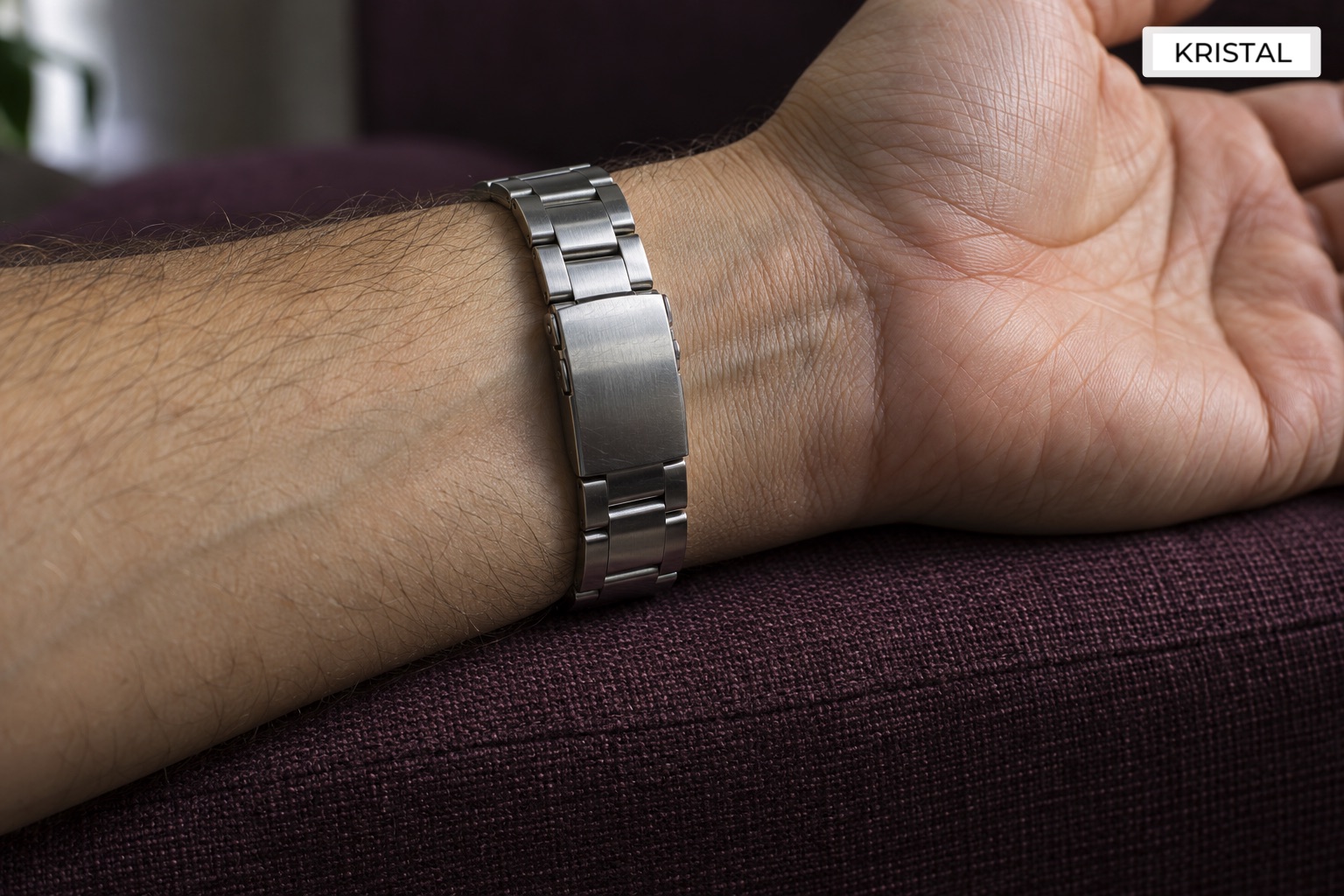
A watch may have had links removed for its previous owner. Before committing, ask about the bracelet fitted to that particular watch:
- What wrist circumference does its present configuration accommodate?
- Are removed spare links included, and are they suitable for this bracelet?
- What adjustment does this exact clasp provide?
- If extra links are needed, who will confirm compatibility, availability and cost?
- Can the fit be assessed before you agree to the purchase?
Do not assume every Rolex clasp has the same adjustment system, or that a link described only as “for Rolex” will fit. Ask a qualified watch professional to assess the bracelet and make any needed adjustment. Leave link removal and clasp work to that professional.
Keep purchase arrangements clear if fitting cannot happen beforehand. A seller’s estimate that it “should fit” is not the same as checking the watch on your wrist. Confirm any extra-link costs before deciding whether the purchase fits your budget.
Decide which part of the fit needs changing
If the case feels comfortable but the watch slides around, ask whether bracelet adjustment can improve the fit. If the case extends awkwardly over your wrist or repeatedly catches your cuff, shortening the bracelet may not solve it. Try another case shape or size before deciding.
For example, someone who likes the look of a larger watch may find a particular case too tall under a work shirt. Another person may like a smaller case but need additional bracelet links. These are separate problems; neither can be answered by recommending “36 mm” or “40 mm” alone.
A comfortable fit also says nothing about the watch’s running condition or readiness for water. If swimming is part of your plans, read the separate guide to water resistance of a pre-owned Rolex.
Common sizing questions
Is a 36 mm Rolex too small? Not automatically. Judge its proportions on your wrist and how it feels in use. There is no need to choose a larger case solely because a listing describes it as a men’s watch.
Can I choose confidently from wrist photos? Photos help you shortlist, especially when the reference and wrist measurement are stated. They cannot confirm comfort or the adjustment available in the actual bracelet.
Will adding links make the case fit better? It can address a bracelet that is too short when compatible links are available. It does not change the dimensions of the case.
If your existing Rolex no longer suits you
If you decide to sell, the Rolex selling guide for Malaysia explains what to prepare. You can contact Kristal with the reference, clear photos and details of the bracelet and any spare links for an initial resale review, subject to inspection. Keep that review separate from choosing the fit of a replacement.