Choose a pre-owned luxury bag around what you carry, how comfortably it sits and how easily you can use it. Check those things before deciding on the colour or silhouette. A bag that looks right but needs careful repacking every time you take out your phone may become an occasional bag rather than your daily one.
Test the exact item where possible. Outside measurements help you shortlist, but they cannot tell you whether a glasses case will pass through the opening or whether the closure will fasten over your belongings. Use your own belongings to check the fit before buying.
A quick daily-use check
| Daily need | What to test | Reason to reconsider |
|---|---|---|
| Carry your essentials | Use your phone in its case, wallet, keys and other must-haves | An essential only fits when pushed or wedged in |
| Close the bag normally | Fasten it with the proposed daily load | You need to squeeze the sides or force the fastening |
| Carry it comfortably | With permission, try the actual handles or strap | You keep adjusting it or dislike where it rests |
| Reach things easily | Retrieve your phone and keys while carrying it | You must unpack other items each time |
| Manage everyday care | Compare its care needs with your normal route | Your routine exposes it to conditions you cannot reasonably avoid |
Start with what you actually carry
Empty your current daily bag and separate essentials from occasional extras. A phone, wallet and keys might be essential; a notebook might only travel with you on meeting days. Include the bulky cases you really use, especially for glasses and electronics.
Decide whether you want one bag to hold everything or are comfortable carrying a separate work tote. Decide before buying a small shoulder bag and discovering you need a second bag every morning.
Lay the essentials together and note their dimensions. Use them to screen listings, allowing for the opening, lining and any internal dividers. For a laptop, measure the device in its sleeve rather than relying on its screen size. Avoid treating an exterior width as usable interior space.
Check the opening and closure
Ask the seller whether a careful capacity check is allowed. Use clean belongings, keep sharp keys contained and do not force anything into the bag. If handling is restricted, ask the seller to demonstrate with suitable items instead.
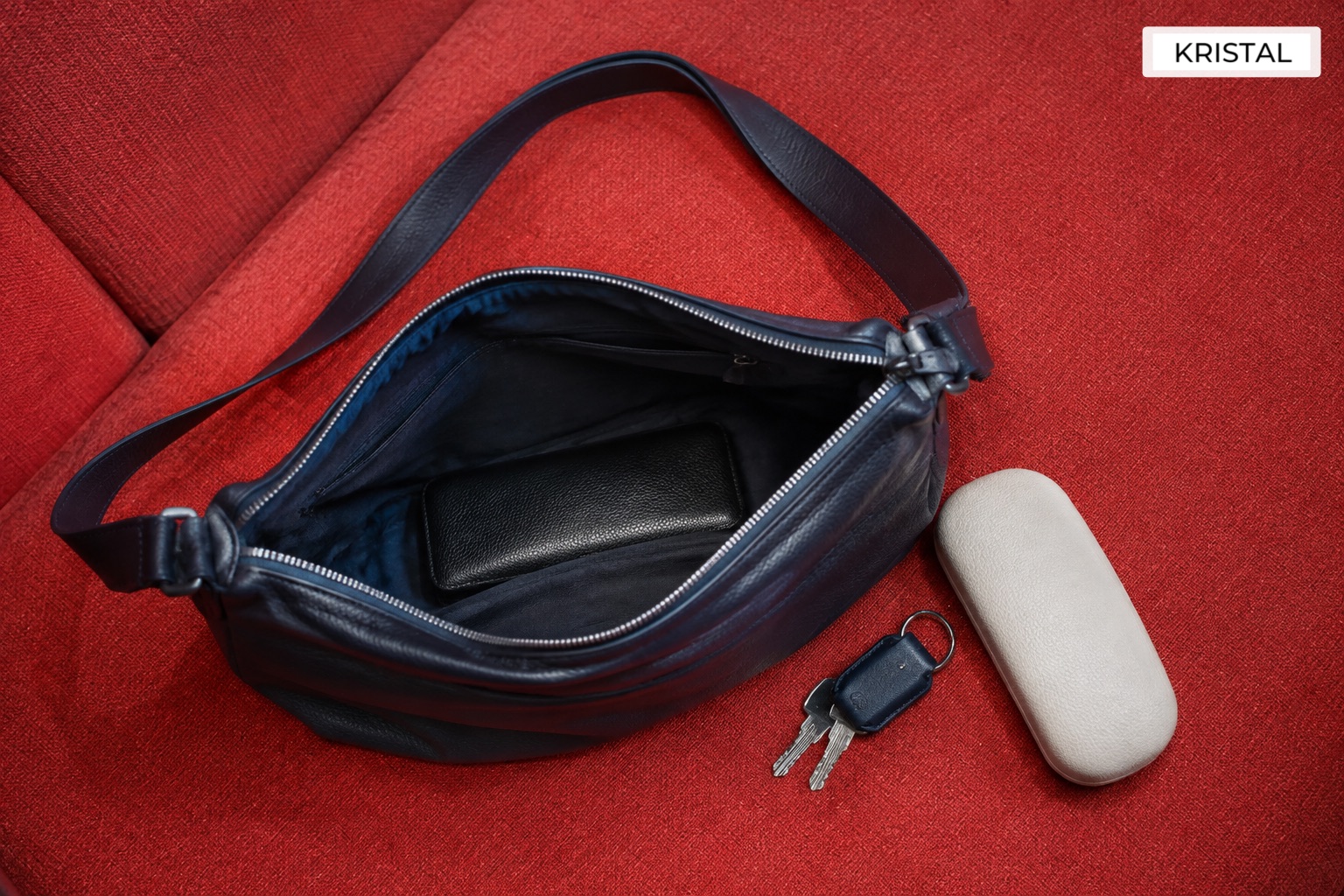
Start with your largest essential. Can it pass through the opening without catching? Does it sit naturally once inside? Then add the smaller pieces and fasten the bag normally. A narrowed opening or a divided interior can make two bags with similar outside dimensions feel very different.
If the closure pulls, the bag is too full for that load. Remove an optional item and try again. If the item you must remove is something you need daily, choose a different bag rather than expecting the leather or fastening to accommodate it later.
Try the carry position with your normal load
An empty bag can feel different from a loaded one. With the seller’s permission, try the exact bag with a representative daily load and its included strap or handles. Do not attach another strap unless the seller agrees.
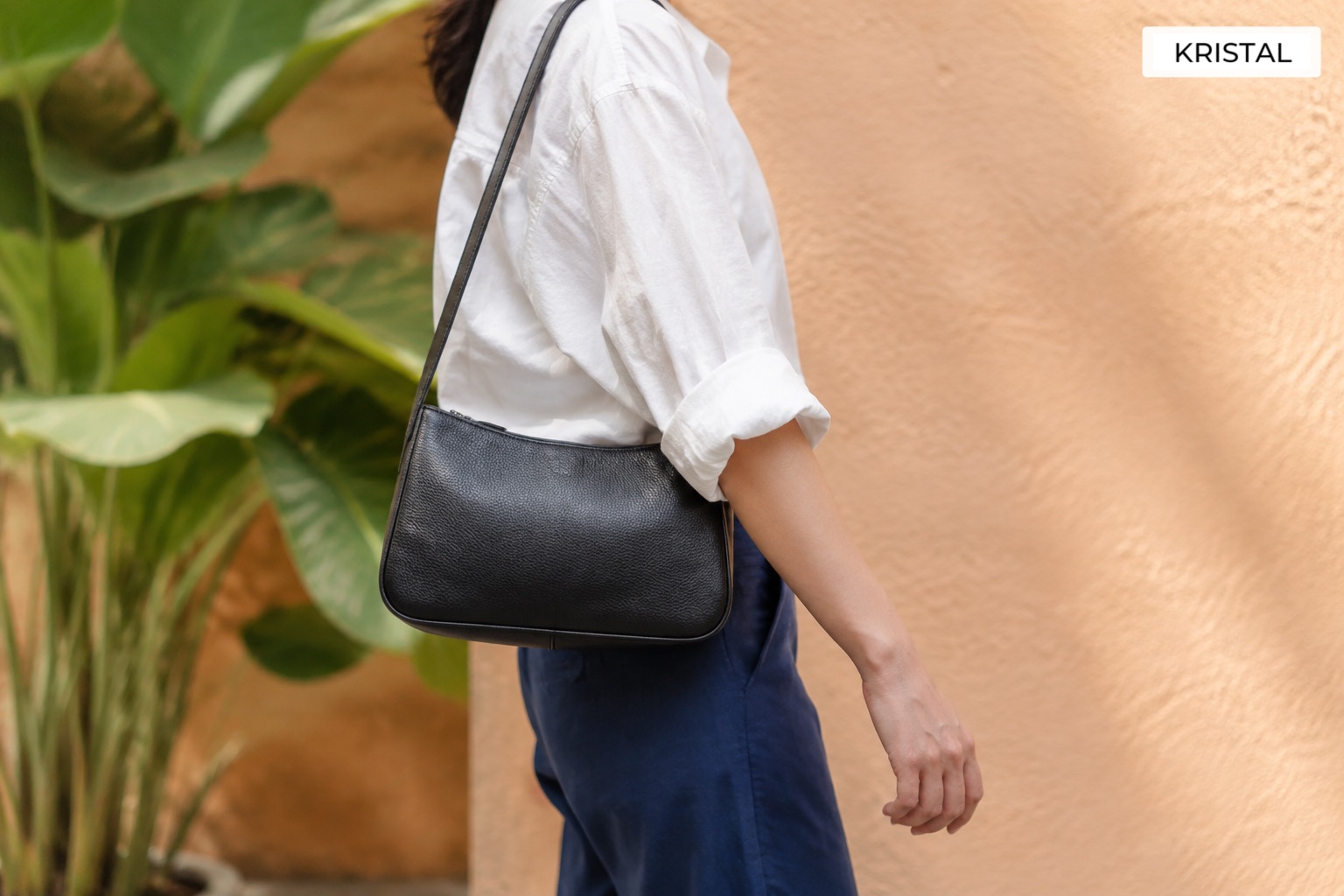
Wear clothing similar to what you normally use. Check whether a shoulder strap stays where you want it, whether the bag rests comfortably against you and whether you can reach inside at that position. Walk a few steps within the permitted area and notice whether you keep moving the bag back into place.
Strap drop helps you compare options, but there is no universal ideal measurement. Your height, clothing, the bag’s shape and your preferred carry position all matter. If you cannot try it, ask how the seller measured the drop and which adjustment was used.
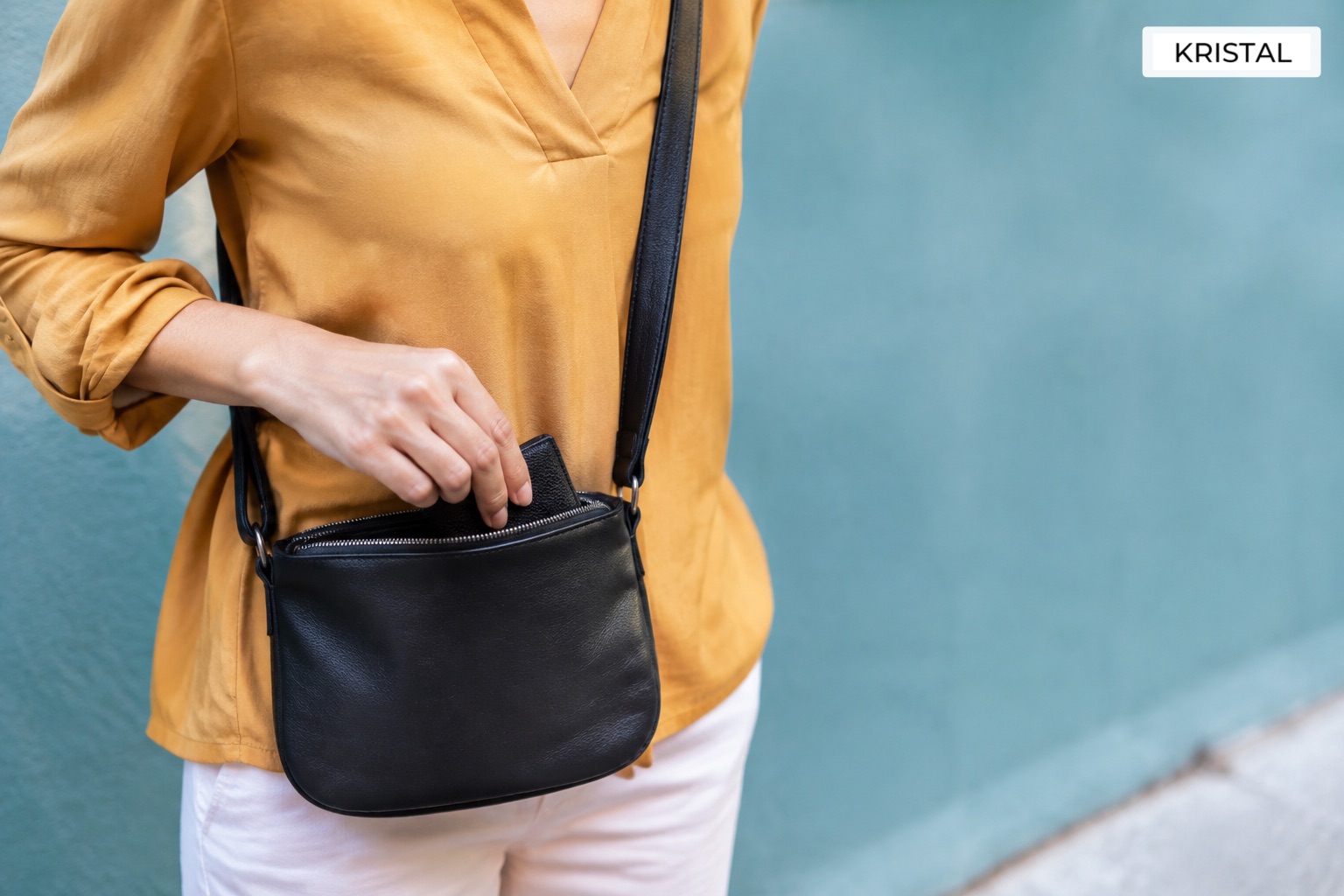
Rehearse the awkward moments
A bag may hold your belongings and still be frustrating to use. Imagine reaching for your phone at a café, taking out your keys at the door or fastening the bag while carrying another item.
For example, a glasses case might fit neatly across the top but block access to the wallet underneath. Rearranging the contents once may solve that. If every small action means removing the case, consider whether you would tolerate it on a busy day.
Also ask to see how the bag rests on a clean surface. You may be happy supporting a soft bag when setting it down; you may prefer one that stays upright. Choose whichever suits the way you use a bag.
Choose care needs you can live with
Think about your actual route in Malaysia: covered parking to an office, outdoor walks between appointments or frequent public transport. Consider possible rain exposure and contact with clothing or rough surfaces. Do not assume that a luxury bag, including one made from coated material, is waterproof.
Check the brand’s care instructions for the specific material. For example, CHANEL advises against overfilling its leather bags to help preserve their shape. Louis Vuitton’s guidance for printed canvas recommends limiting contact with hard or rough surfaces. Those examples show why care advice needs to match the material. Avoid overfilling, and decide whether you can reasonably protect the bag during the activities you have in mind. A bag requiring precautions you know you will skip is a poor daily match, however much you like it. Do not experiment with protective sprays or home treatments to make an unsuitable choice work.
Check the functions of this pre-owned item
Ask the seller to demonstrate the fastening, zip and adjustable strap, where fitted. Confirm which detachable straps, pouches or other removable pieces are included. Ask whether accessories shown in the photographs are included in the price.
Keep practical fit separate from authenticity and condition. A working closure does not authenticate a bag, and a comfortable carry test does not establish its full condition. Ask separately about the seller’s authentication process, disclosed wear and written purchase terms. If you later resell an existing bag, Kristal’s condition guide explains the different question of how wear can affect a seller’s assessment.
If you are buying remotely
Request the exact item’s measurements, strap details and clear photos of the opening and unobstructed interior. Ask for a short capacity demonstration using agreed items with dimensions similar to yours. “Fits a phone” is too vague when cases and phone sizes differ.
A video can help you assess access and closure, but it cannot establish how the bag will feel on your body. Confirm the seller’s written inspection and return terms before paying. If a daily essential’s fit remains uncertain and the terms do not give you an acceptable way to resolve it, pause the purchase.
Keep a simple shortlist worksheet
For each candidate, mark these as yes, no or unconfirmed. Mark anything you have not tested as unconfirmed:
- My essential belongings fit without pressure.
- The closure works naturally with that load.
- The carry position feels comfortable.
- I can retrieve frequently used items easily.
- The care requirements suit my routine.
- I understand the included accessories and purchase terms.
Write one specific question beside every unconfirmed answer. Resolve essential requirements before buying; hoped-for resale value is not a substitute for a bag you can use.
Once a bag passes these practical checks, use the cost-per-wear guide to compare its purchase cost with how often you realistically expect to carry it. Keep your spending limit separate, and do not rely on a hoped-for resale price to make the purchase work.
Common questions
Should I bring every occasional extra to a viewing?
Bring your representative essentials if the seller permits a fit check. Test occasional extras separately so you can see what changes on heavier days.
Can an organiser fix a bag that feels impractical?
It may help arrange loose items, but it takes up space too. Check the bag with the organiser you intend to use rather than assuming it will improve capacity.
What if a bag only works without my glasses case?
If you need that case daily, treat it as an essential. Choose another bag or make a deliberate plan to carry it separately before purchasing.
When your current bag no longer suits you
If an existing bag sits unused because it no longer fits your routine, check Kristal Luxury’s accepted brands and contact Kristal about an initial resale review, subject to inspection. Choose your next daily bag for the way you will use it.