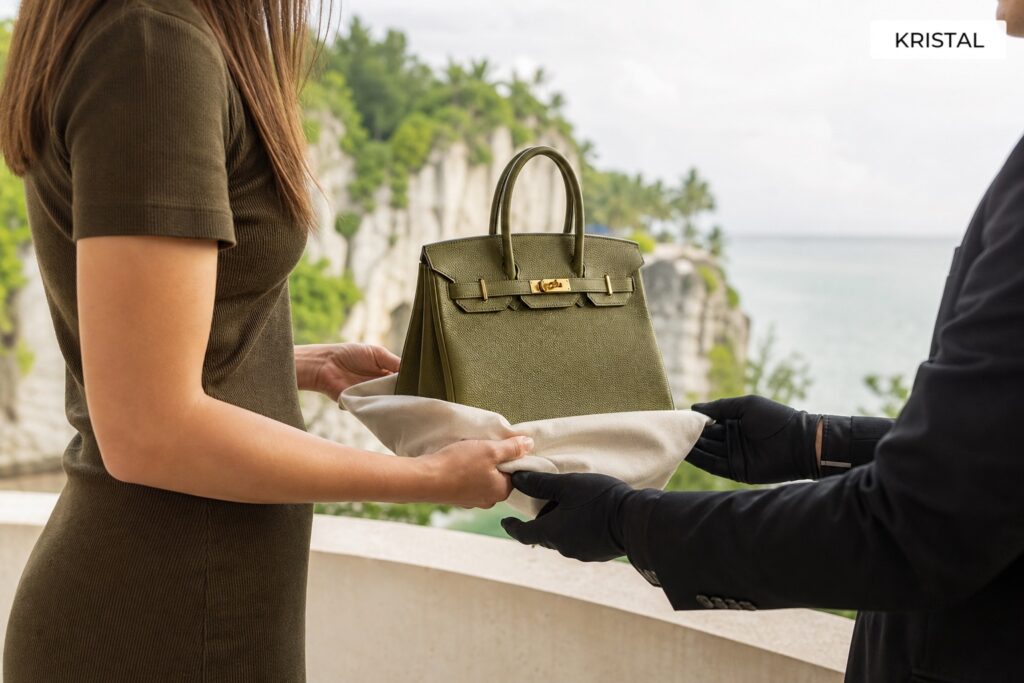
If you get a first luxury bag offer in Malaysia, you do not need to treat it like an automatic yes or an automatic insult. The cleaner question is whether the offer matches your goal, your bag file, and the route you actually want to use.
This page is about that first-offer decision. It is not another low-offer complaint page, it is not only a multi-offer comparison page, and it is not about a quote that changed later after inspection. If the number already feels weak or unclear, compare it with the low-offer guide. If you already have several direct quotes, use the cash-offer comparison guide. This page answers one earlier decision: what should you do with the first usable offer in front of you?
Quick answer: when should you accept the first offer?
| Situation | Usually the cleaner move | Why |
|---|---|---|
| the route fits your goal, the explanation is clear, and speed matters | accept or move the conversation forward | the offer already matches what you actually wanted from the sale |
| the number may be usable but the conditions still feel vague | ask better questions first | you need clarity before you treat the offer as a real decision |
| the route does not match your goal or the result feels incomplete | compare another route or another buyer | you are not really judging like with like yet |
| your file was weak and may have shaped the first result unfairly | rebuild the file before deciding | the first number may be reacting to missing clarity, not only to the bag itself |
You usually should accept the first offer only when the route is right for you, the bag file was clear enough, and the explanation leaves little guesswork. If the main reason you are hesitating is speed versus preparation, compare this with the sell-now-or-wait guide.
What the first offer should answer before you say yes
The amount matters, but it is not the whole decision. A useful first offer should also tell you what route you are being offered, what still depends on closer inspection, and whether the process sounds clean enough to trust.
That is why two sellers can receive the same number and make different choices. One seller wants fast payout and already has a clear file. Another seller wants more flexibility, more comparison, or a slower route. The right decision depends on the fit, not only on the headline amount.
1. Accept the first offer when the route already matches your real goal
If your real priority is speed, simplicity, or reducing the amount of back-and-forth, the first offer can be good enough even if it is not the theoretical best number. That does not mean accepting blindly. It means recognizing when the route already fits the outcome you wanted.
This matters most for sellers who already know they want a direct route instead of a slower one. If that is your position, compare the logic with the fastest-selling guide and the main Malaysia selling guide instead of judging the first direct offer against a slower-route expectation.
2. Do not accept it yet if the explanation is still too thin
A first offer is weaker when the number arrives faster than the reasoning. You should be able to tell whether the offer is based on the actual condition shown, whether it is still conditional, and what would most likely change later.
- Is this route direct cash, buyback, or a slower path dressed up as a fast answer?
- What still needs to be confirmed in person?
- Did missing extras, visible wear, or prior repair history already affect the result?
- Would the same route still apply if the bag file changes?
If those basics are still fuzzy, the next step is usually better questions, not a rushed acceptance. If the number already feels weak as well, compare it with the low-offer guide.

3. Sometimes the first offer is fine, but your file is not
Many sellers hesitate at the number when the real problem is the first submission. If the photos were weak, the included set was unclear, or the condition notes were vague, the first result may have been shaped by uncertainty more than by the true bag file.
That does not automatically mean the offer was wrong. It means you should not make a final decision until the file is strong enough to judge fairly. If you suspect that happened, clean up the next step with the photo checklist guide and the full-set guide.
4. Compare another offer only when the comparison will actually be useful
Waiting for a second opinion makes sense when it will answer a real question. It is less useful when the second request uses a different photo set, a different disclosure level, or a different route expectation. Then you are not comparing the same bag decision anymore.
If you do compare, keep the file consistent. Send the same current photos, the same disclosure notes, and the same included-set details. If you already have more than one direct quote, move to the cash-offer comparison guide rather than using this page as a negotiation script.
5. Waiting is only useful when it improves the decision
Some sellers do not accept the first offer because they need a short preparation window. That can be sensible if the delay helps you rebuild the file, clarify your route, or decide whether speed really matters. It is less useful when the delay is only emotional drift.
A first offer often loses value as a decision point when too much changes after it arrives. If you wait, be clear about why. If the offer gets older while the bag file changes, compare it later with the quote-validity guide instead of assuming the original number will still behave the same way.
When the first offer is often good enough
- you wanted a faster direct route from the start
- the bag file was current, honest, and complete enough
- the explanation is clear about what the number does and does not cover
- no major missing question is still bothering you
- you are not secretly comparing a direct route against a slower-route expectation
In that situation, chasing endless extra checks can waste time without producing a cleaner decision.
When the first offer should probably not be accepted yet
- the number arrived with almost no reasoning
- you are unsure what route is actually being offered
- the file was thin and may have caused avoidable caution
- you need to compare because your real question is still unanswered
- the offer may age out while the bag, extras, or condition keep changing
If the process later moves into a changed result after inspection, treat that as a different problem and compare it with the quote-change guide.
Questions to ask yourself before you decide
- Is this route actually the one I wanted?
- Did the first file show the real bag clearly enough?
- Do I understand what could still change later?
- Am I hesitating because the offer is unclear, or because I have not chosen my route goal?
- Will another comparison answer something real, or just delay the same decision?
Those questions usually cut through the noise faster than trying to guess what an ideal seller would do.
Frequently asked questions
Should I always compare another buyer before accepting?
No. A second comparison only helps when it answers a real uncertainty. If the first route already fits your goal and the explanation is clear, another comparison may only slow a decision that was already usable.
What if the first offer feels fair but not exciting?
That usually means you need to separate expectation from route fit. A practical direct offer can still be the right choice even if it is not the number you hoped to hear.
Can I accept the first offer and still expect it to change later?
Some early offers remain conditional until closer review. The key is whether that condition was explained clearly before you moved forward.
What if I need a few days to decide?
That is fine, but keep the bag file stable and recheck the offer later if the delay becomes meaningful or the condition and included set change.
What if I am not sure whether I want speed or a slower route?
That is a route-choice problem first. Go back to the main Malaysia selling guide before you judge the first direct offer against the wrong goal.
The first offer is only useful when it fits the real decision
If you are wondering whether to accept the first luxury bag offer in Malaysia, the practical answer is this: accept it when the route fits, the file was clear, and the explanation gives you enough certainty to move forward cleanly. Slow down when the file is weak, the route is unclear, or the comparison you actually need has not happened yet.
If you want to restart from a cleaner current file, use the contact page once your photos, condition notes, and route goal are ready.