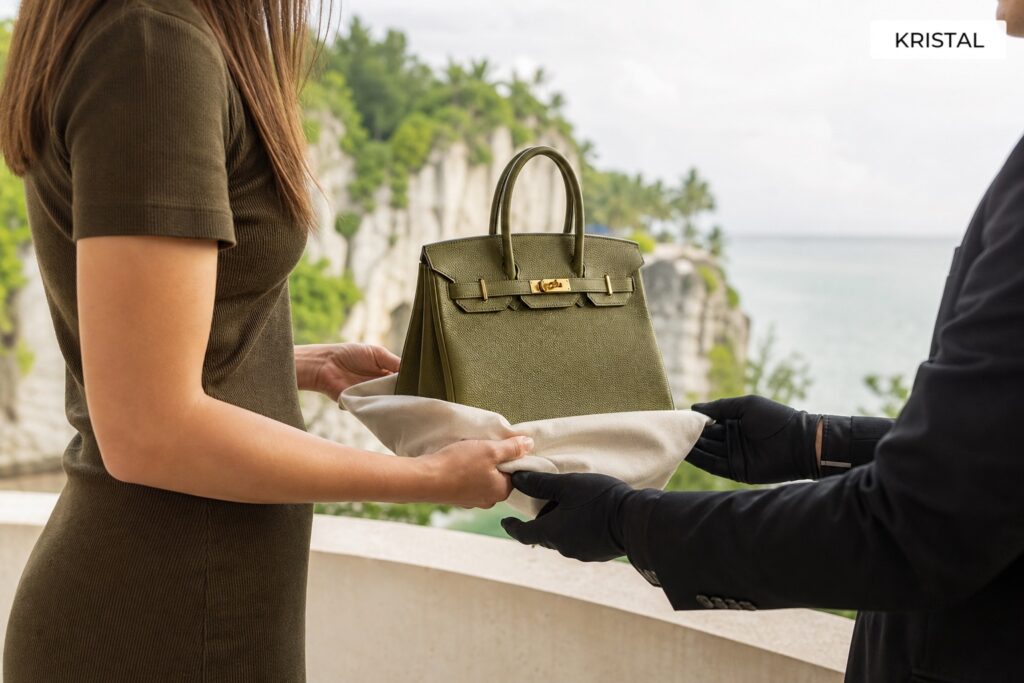
If you are preparing to sell an inherited luxury bag in Malaysia, the first useful question is often not price. It is paperwork and proof. A buyer can usually start reviewing the bag before every detail is perfect, but the conversation is much easier when the family can explain who owns the bag now, who is coordinating the case, and what documents or context are actually available.
This guide is for family members, executors, or estate contacts handling a bag that did not come through a normal one-owner sale. If the bag is not inherited and you are simply helping another living owner, use the third-party seller guide. If your main question is still the broad route choice, start with the main Malaysia selling guide. This page answers a narrower question: what documents, context, and ownership proof usually help before the first inherited-bag review?
Quick Answer: What Proof Usually Helps First?
| Question | What to make clear | Why it matters |
|---|---|---|
| Who owns the bag now? | Which family member, estate contact, or authorised person is allowed to move the discussion forward | The review stays cleaner when the buyer knows who can approve the next step |
| What bag is it exactly? | Brand, model or line if known, size, colour, materials, and any obvious missing extras | The first review is more useful when the file starts from the correct item |
| What proof or context is available? | Any receipt, dust bag, box, card, repair note, family explanation, executor note, or estate paperwork that keeps the story consistent | A buyer can separate bag-condition questions from ownership questions earlier |
| Who will answer follow-up questions? | The person who knows the bag best, or the family contact coordinating the file | The conversation slows down when every answer has to pass through several people |
| Who will hand the bag over? | The owner, executor, or another clearly named family contact | Handover, route choice, and payout expectations should not change at the last minute |
The short version is simple: do not lead with “how much is it worth?” if the document trail and family contact path are still unclear. Start with a file the buyer can actually follow.
Why the Document Question Comes Before the Price Question
A standard third-party case usually starts with one simple issue: the contact person is not the owner. An inherited-bag case adds another layer. The ownership may still be moving through a family handover, or it may already be agreed privately but not obvious to the buyer on first contact. The bag may have come from a parent, a relative, or a wider estate. One person may hold it while another person handles messages. The document trail may be partial, and that is often the real reason the first review feels messy.
That does not automatically block a sale. It just means the buyer is dealing with two layers at once: the bag itself, and the proof around it. If those layers are mixed together or explained differently from one message to the next, even a straightforward bag becomes harder to review cleanly.
This is why the inherited case needs a narrower document-first angle rather than another broad “someone else” article. The real problem is not only messenger versus owner. It is whether the inherited file is coherent enough to continue.
1. Confirm Whether the Bag Fits the Accepted Brand Scope First
Before you spend time sorting documents, confirm that the bag itself fits the review scope. Kristal only accepts a defined list of brands, so the first practical check is whether the inherited bag belongs to one of the accepted names shown on the accepted brands page. That simple check prevents a family from building a perfect file for the wrong destination.
If the family is not sure about the exact model, that is fine. Start with the brand, the broad bag type, and clear current photos. You do not need a perfect collector description on day one. You do need enough clarity that the review begins with the right item instead of guesswork.
2. Clarify Who Can Actually Move the Case Forward
In inherited cases, the first useful answer is often about authority, not price. Who is allowed to approve the route? Who can answer follow-up questions honestly? Who decides whether the bag will be handed over? If there are several family members involved, who is the main contact?
The cleanest first message usually says this directly. For example: the bag belonged to a parent, one sibling is holding it, and another family member is coordinating the first review. That is much better than speaking as if the bag were simply yours when it is not.
You do not need to turn the article into legal advice to make this useful. The practical rule is smaller: if the buyer can understand who owns the decision and who can confirm the bag details, the commercial review usually becomes easier.
3. Build One Consistent Proof-and-Bag File Before Asking for a Quote
An inherited bag often arrives with uneven information. The family may have the bag, but not the receipt. They may know the brand, but not the exact model. They may have a dust bag, box, or older repair note, but no one has laid everything out in one place yet. This is where the file matters.
Start with current photos and one short note about what is known. Use the bag photo checklist so the first review covers the obvious angles: front, back, base, corners, handles, strap, hardware, and interior. Then add the proof layer separately. If the family still has the box, dust bag, strap, lock, receipt, service note, executor instruction, or another piece of estate context, mention it clearly. If something is missing, say that too. The file gets stronger from honesty, not from pretending everything is complete.
If the inherited item is part of a wider wardrobe or estate clear-out, do not mix several bags into one confused thread unless that is really the goal. If you are handling multiple pieces, sort them first with the collection-selling guide so one unclear bag does not slow the entire batch.
4. Separate Ownership Proof from Condition Proof
Families often bundle everything together at once: who owned the bag, who is selling it, whether the corners are worn, whether the strap is missing, and whether the lining smells musty after storage. That is understandable, but it can make the review harder to follow.
A better structure is to separate the case into two short parts:
- ownership and authority: who the bag came from, who is handling the sale, and who can approve the next step
- bag condition and completeness: what the bag is, what shape it is in, and what accessories, receipts, or repair notes still exist
When those two layers stay separate, the buyer can respond more clearly. One answer can address whether the file is workable. Another can address whether the condition looks strong enough for a useful first review.
5. What Documents or Context Usually Help?
You do not always need formal estate paperwork before a first commercial conversation can begin, but any clear context helps. That can include a receipt, repair note, original dust bag, box, authenticity card where relevant, a short family explanation of how the bag came into the seller’s hands, or an executor or beneficiary note that explains who is coordinating the file. The point is not to build a courtroom file. The point is to keep the ownership story consistent enough that the review does not wobble later.
If the family has almost no paperwork, say that early instead of letting the buyer assume there is more to come. A bag can still be reviewable when the paperwork is limited. The important thing is that the gap is stated honestly.
For the accessory side of the file, use the full-set guide. It helps families explain what is included, what is missing, and what still matters even when the inherited bag is no longer in a perfect original set.
6. When the Family Is Still Unsure, Slow Down Before the Handover
The pressure point in inherited cases is usually not the first message. It is the moment the process starts to feel real. If the family is still unsure who approves the sale, whether another relative expects to be consulted, or whether the bag story is still incomplete, do not rush to the handover stage just because the first reply sounds promising.
A cleaner process is to use the first review as a clarity step. Confirm the bag, confirm the route, confirm the family contact, and then move forward. If the answers are still split across several relatives, fix that before the bag leaves anyone’s hands.
Common Mistakes in Inherited-Bag Cases
- speaking as if the bag is simply yours when the ownership story is more complicated
- letting several family members answer separately with different details
- mixing multiple bags into one confused review without sorting the file first
- hiding missing paperwork or unclear ownership context in the hope that the first quote will stay higher
- moving toward handover before the family has agreed who is actually approving the sale
None of those mistakes means the bag cannot be sold. They do mean the conversation becomes harder to trust and harder to keep moving.
Frequently Asked Questions
Can I ask for a quote before every document is fully organised?
Usually yes, if you explain the situation honestly. A first review can still begin while the family is clarifying the full background, but the buyer should not be misled about who is handling the case or what proof is still missing.
What if I do not know the exact model name?
Start with the brand, bag type, clear photos, and any details you do know. A clean file matters more than a perfect label in the first message.
Does missing paperwork block the sale?
Not always. It can change the review and the confidence of the first answer, but many cases can still be discussed as long as the missing pieces are stated clearly.
What if several family members are involved?
Choose one main contact before the conversation gets deeper. The review becomes smoother when one person coordinates the file and another person is not revising the story halfway through.
Should I treat an inherited bag differently from a normal bag when preparing photos?
The photo standard is the same. The difference is that the ownership story also needs to stay clear, not just the bag condition.
Start With Proof, Then Ask for the Review
If you want to sell an inherited luxury bag in Malaysia, start by making the proof and bag file easy to understand. Confirm whether the brand fits the accepted review scope, say who is handling the case, show the real bag clearly, and state what documents, accessories, or ownership details are included or still unknown. That usually leads to a cleaner first conversation than rushing straight to the price question.
If you want to start a photo-first review for an accepted brand, check the accepted brands page and then use the contact page. If the bigger issue is simply helping another living owner rather than handling an inherited case, keep the third-party bag seller guide open alongside this page.